Our Work
Protecting Kintyre’s Rainforests
Invasive Non Native Species
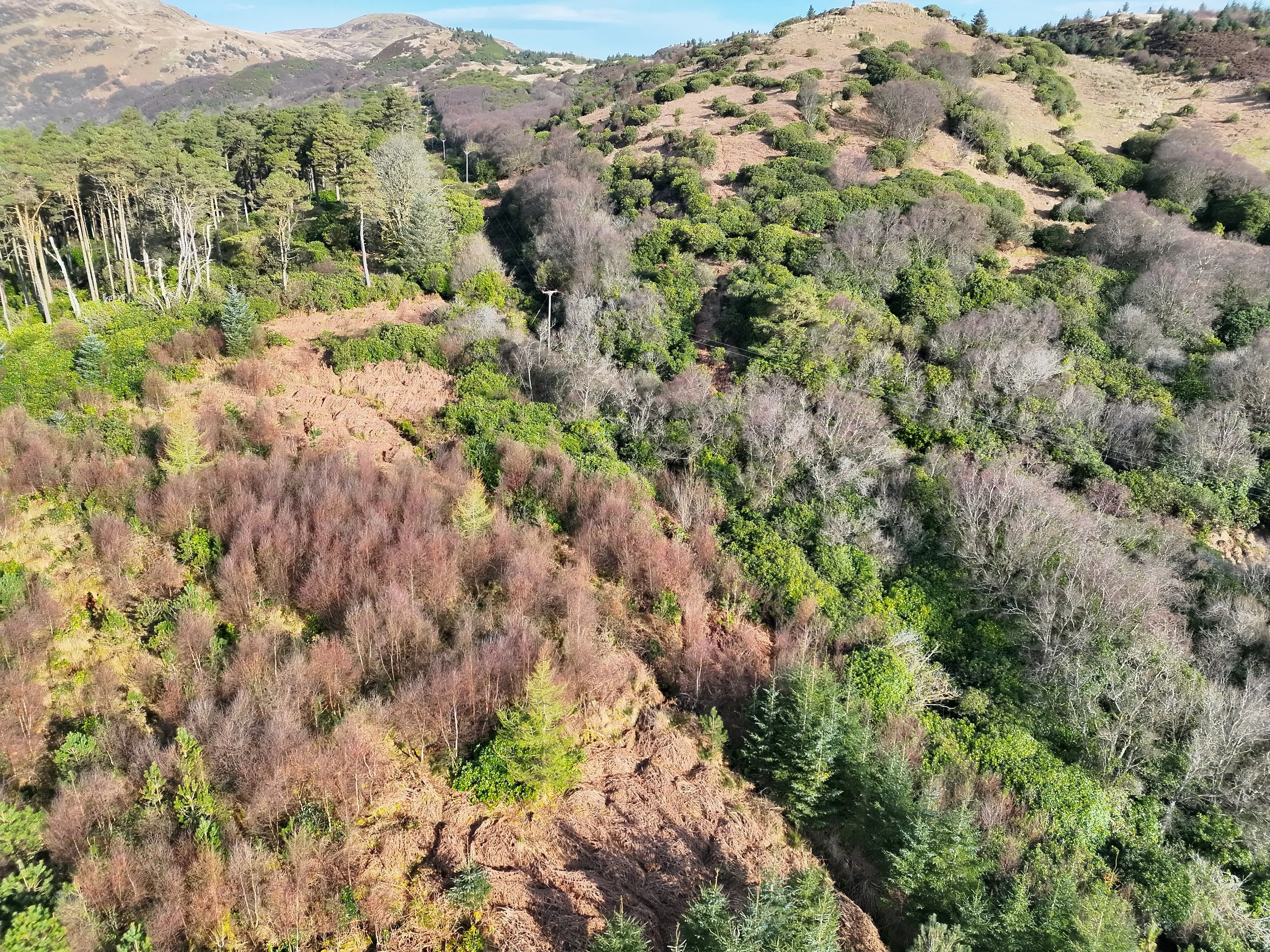
Species such as rhododendron ponticum can overwhelm rainforest ecosystems by blocking light, suppressing native plants, acidifying soils, and preventing natural regeneration. Invasive species also reduce habitat quality for the internationally important mosses, lichens, fungi, and wildlife that depend on rainforest conditions.
Herbivore Grazing
One of the major challenges facing Scotland’s rainforest is excessive herbivore pressure, particularly from high deer numbers. When grazing levels are too high, young trees and woodland plants are repeatedly browsed before they can mature, limiting the rainforest’s natural ability to regenerate and expand. This can lead to ageing woodlands with little new growth, reducing habitat resilience and biodiversity over time.
Habitat Loss
Much of Scotland’s rainforest survives in small, isolated fragments rather than connected landscapes. Historic deforestation, inappropriate land use, commercial forestry, and development have reduced and disconnected these habitats, making them less resilient to climate change and biodiversity loss.
What have we been doing?
In response to these challenges, the Kintyre Rainforest Alliance has been working collaboratively with communities, landowners, researchers, and public bodies to support long-term rainforest recovery across Kintyre. We recently completed the development phase of a NatureScot-funded project surveying East Kintyre for invasive non-native species (INNS) and conducting Habitat Impact Assessments (HIA), helping to build a clearer understanding of the pressures facing these habitats.
Alongside this, we have supported collaborative research into effective methods of controlling and eradicating invasive species, while engaging with landowners around practical and locally appropriate approaches to deer management, including exploring opportunities for community-led incentives such as a community-owned deer larder. We are also working with Forestry and Land Scotland and other landowners to strengthen habitat connectivity, create rainforest corridors, and support natural woodland regeneration wherever possible, helping fragmented rainforest sites become more resilient and connected over time.
We have received generous support from both NatureScot and Fauna and Flora to help with these initiatives.