
Building the foundations for East Kintyre’s rainforest recovery
Over the past year, the Kintyre Rainforest Alliance has been leading the development phase of the East Kintyre Biosphere Project, supported by Native Woods Cooperative and funded through the Nature Restoration Fund.
While this phase wasn't about large-scale restoration on the ground, it was a crucial step in making that future possible. The project focused on understanding the landscape, building partnerships, and gathering the information needed to restore and expand East Kintyre's temperate rainforest habitats.
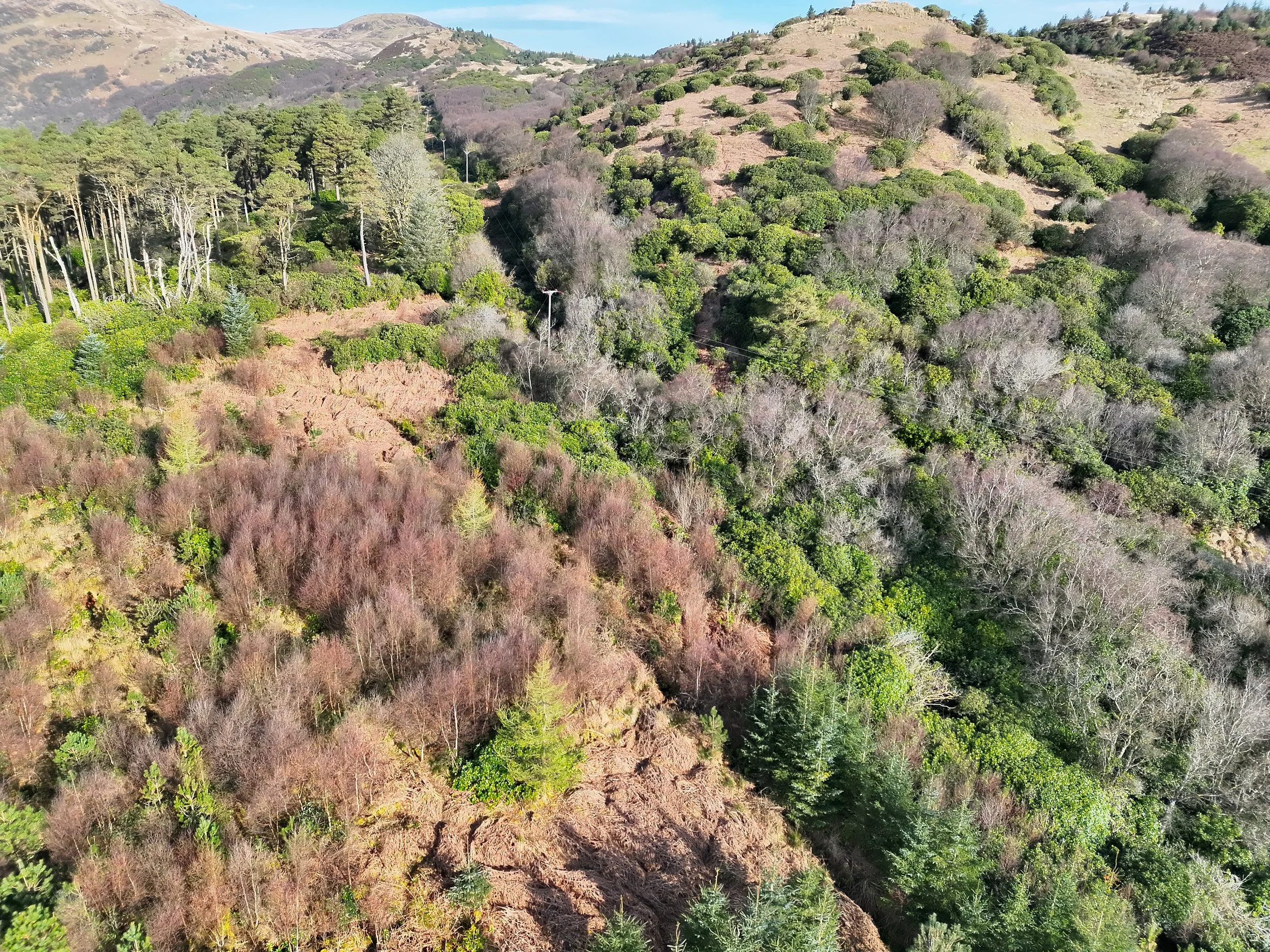
A photograph taken using our drone to show the spread of Rhododendron ponticum across a wooded hillside
A Landscape with Huge Potential
The project covers around 6,500 hectares of East Kintyre and aims to protect, connect and expand rainforest habitats as part of a wider nature network.
Surveys focused on two of the biggest challenges facing the rainforest today: invasive non-native species, particularly rhododendron, and unsustainable grazing pressure from deer. Alongside this work, the Kintyre Coastal Network began gathering information on freshwater, coastal and marine habitats, helping to create a more connected approach to nature recovery across the region.
Working Together
One of the project's greatest successes has been the level of collaboration achieved across the area.
We worked with local landowners, community groups, estates, farmers, public bodies and conservation organisations. Securing survey access across such a diverse landscape was no small task, but many landowners actively supported the project's aims and recognised the need to tackle invasive species and support woodland regeneration.
Community engagement was equally encouraging. Events, workshops and outreach activities helped raise awareness of Scotland's temperate rainforests and inspired local people to take action themselves, including removing invasive plants from their own land and gardens.
What We Learned
The surveys confirmed that action is urgently needed.
Rhododendron ponticum remains the most widespread invasive threat across the landscape, outcompeting native plants and preventing natural woodland recovery. Grazing pressure from deer is also having a significant impact, limiting the ability of young trees to establish and grow. Thermal imaging surveys recorded more than 180 deer across the project area, with a high proportion identified as sika deer.
Despite these challenges, the findings also revealed significant opportunities. Important fragments of rainforest habitat still survive throughout East Kintyre, alongside extensive areas of native woodland that could help reconnect and expand these valuable ecosystems.
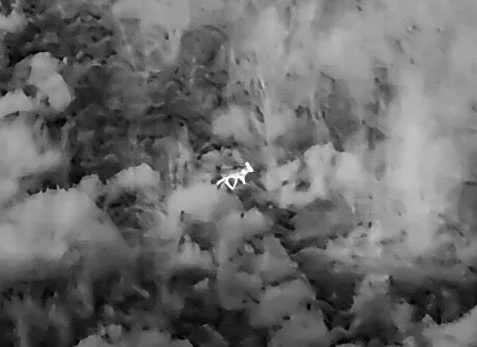
Thermal image taken from our drone showing a deer in woodland
Looking Ahead
The development phase has created a strong foundation for future restoration. It has built partnerships, gathered vital evidence, engaged local communities and demonstrated that landscape-scale rainforest recovery in East Kintyre is both achievable and widely supported.
The next stage will focus on delivering practical restoration work on the ground. This includes removing invasive species, reducing grazing pressure through coordinated deer management, and supporting woodland recovery through natural regeneration, planting and habitat connectivity projects.
A key part of the vision is the creation of a locally based "Rainforest Squad", providing jobs, training and long-term skills development while helping to restore one of Scotland's most important rainforest landscapes.
While challenges remain, the message from this first phase is clear: East Kintyre's rainforests still have the potential to thrive. With continued collaboration, community support and investment, the building blocks for recovery are firmly in place.